Linggo, Setyembre 21, 2014

Curacha Never Stops


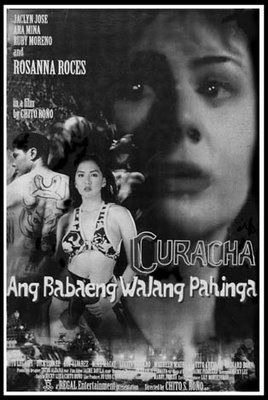
Ang Curacha: Ang Babaeng Walang Pahinga ay mula sa direksyon ni Chito Roño noong 1999.

Ito ay tungkol sa isang live sex performer. Hindi talaga niya kagustuhan ang maging torera ngunit dito siya dinala ng ihip ng hangin at dahil na rin sa wala siyang pinag aralan. Isa pa sa mga dahilan ay kinalakhan niya na na ang pagiging torera ang pinakamabilis na paraan para kumita ng pera dahil pati mga kamag-anak niya ay pagtotorera rin ang hanap-buhay.

Ang ipinakitang pag-aacting ni Rosanna Roces bilang Curacha ay masasabi kong effortless. Bagay na bagay kasi sa kanya ang role niya. Wala siyang kalatoy-latoy bumitaw ng mga linya na bumagay naman talaga sa karakter niya sa pelikula bilang walang pinag-aralan.

Sa cinematography, sa tingin ko ay maayos naman. Wala ako masyadong masabi kasi malabo yung kopyang napanood ko. :) Ang napansin ko lang, magaganda ang mga anggulong kuha sa mga partikular na eksena. Hindi nababad ang isang anggulo sa isang eksena sa pelikula.

Hindi rin masyadong gumamit ng background music ang pelikula. Puros sound effects tulad ng ingay ng sasakyan, ng mga tao at ng radyo. Pero, mas malakas pa ang sound effects sa mga dialogue ng mga karakter (o dahil din ito sa panget na kopya na nahingi ko)

Lagi ding madilim ang mga kuha sa ilang eksena. Pero sa tingin ko, isa rin itong simbolo. Sinisimbolo nito ang madilim na pinagdaraanan ni Curacha sa kanyang buhay.

Sa pagpapatupad ng Martial Law, sumisimbolo ito sa lahat ng pasakit sa buhay na natikman ni Curacha. Sa eksenang patapos na ang pelikula, nagtapos rin ang Martial Law sa bansa at pagdedeklara ng demokrasya sa Pilipinas. Sumasalamin ito sa pagkakaroon ni Curacha na mabuhay pa.

Sa kabuuan, wala akong masyadong naramdamang suspense factor at intense feeling sa pelikula. Pero ayon nga, Tulad ng sinabi ko sa cinematography ay maayos naman. Check din sa music. At check din sa characters. :)

Ginto, Pilak, Kamatayan

Ang Oro, Plata, Mata ay isa sa mga pelikulang nasa direksyon ni Peque Gallaga noong 1982.

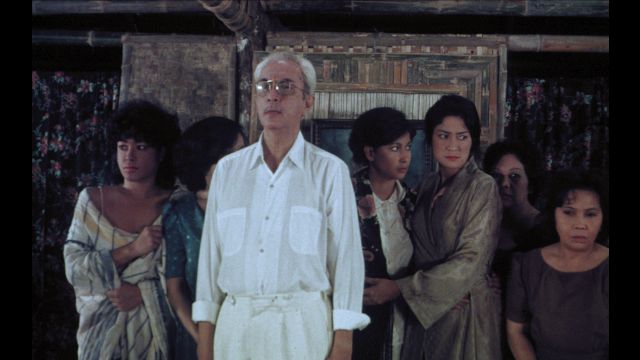
Ang pelikula ay tungkol sa dalawang upper class na pamilya, ang mga Ojeda at Lorenzo. Ang Oro sa title ng pelikula ay sumisimbolo sa karangyaan na tinamasa ng dalawang pamilya sa panimula ng pelikula.

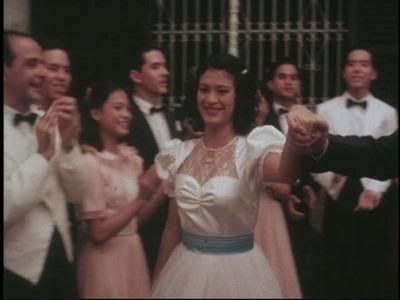
Sa panimula ng pelikula, mayroong isang pagtitipon sa bahay ng mga Ojeda. Ito'y dahil kaarawan ng isa sa mga apo ni Don Claudio, si Margarita.


Ang Plata naman ay sumisimbolo sa pagtuloy o pagbisita ng mga Ojeda sa hacienda ni Inday Lorenzo para makaiwas sa mga paparating na mga Hapones.


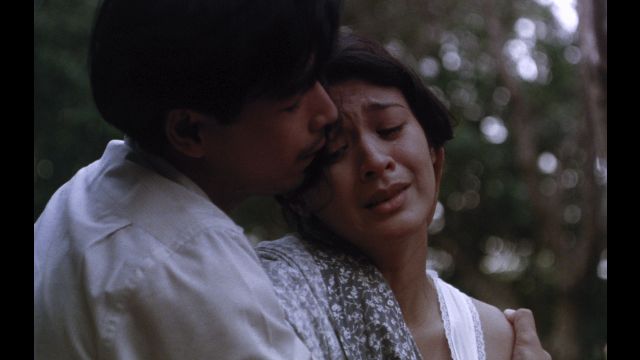
Dito makikita ang unti-unting pagtaas ng mga emosyon ng mga eksena papunta sa climax ng pelikula. Samantala, ang Mata naman ay sumisimbolo sa mahirap na pamumuhay ng mga Ojeda at Lorenzo sa kagubatan, digmaan at kamatayan.


Nagpakita ng iba't ibang pagbabago ang mga karakter sa pelikula. Si Miguel (Joel Torre) na dati'y Mama's boy at torpe ay nagkaroon ng lakas ng loob at naging matapang dahil sa fighting skills na natutunan niya kay Hermes (Ronnie Lazaro). Naipakita ang katapangan ni Miguel noong sumama siya kay Hermes para iligtas si Trining (Cherie Gil) sa mga guerilla sa pamumuno ni Melchor na dating trabahador ng mga Lorenzo.

Si Margarita (Sandy Andolong) naman ay binansagang "ahas" ng kanyang kapatid na si Trining. Ngunit hindi naman niya kasalanan na nahulog ang loob ni Miguel sa kanya dahil nakaramdam si Miguel ng respeto at tender affection mula kay Margarita na hindi niya naramdaman mula kay Trining.

Natutunan naman ni Trining na gamitin ang kanyang charms para makaligtas at mabuhay pa ng matagal. In short, ito ang kanyang defense mechanism.

Isa sa mga simbolismong nakita ko ay ang pagkuha ni Trining sa isang santol na dumami at natapon at nasayang lamang. Sumisimbolo ito sa pagiging makasarili ni Trining na iligtas ang kanyang sarili at mabuhay sa pamamagitan ng ibang tao.

Isa rin ang pagkamatay ni Yaya Tating (Mary Walter). Hindi man ito masyadong napansin ngunit isa ito sa mga mahahalagang eksena sa pelikula. Ang pagtahak ng matanda sa daan papuntang kanyang kamatayan ay lalong nagpabigat sa emosyon ng pelikula. Ito rin ang naging hudyat na papunta na sa climax ang pelikula.

 Ang kabuuan ng pelikula ay amazing. Kahit na mabagal ang takbo ng mga eksena sa panimula, bumawi naman ito sa pagitna hanggang sa katapusan ng pelikula. May suspense factor kumbaga. Check sa production design, check din sa cinematography, check din sa narrative, at check na check sa mga karakter ng pelikula. Clap clap kay Peque Gallaga. Dapat talaga siyang bansagang isa sa mga pinakamahuhusay na direktor sa history ng Philippine Cinema. :)

Linggo, Setyembre 14, 2014

Karnal (1983)

"Nursing and Puring, a newlywed couple, come home to the village of mulawin to live in the ancestral house of Nursing's father, Gusting, a land owner. Puring , His city-bred wife, resembles Nursing's dead mother who had committed suicide after having been publicly shamed and punished by her husband for her romantic liaison. Doray, Nursing's, sister, has also been a victim of her father's authoritarian rule as she has been forced to marry a man not of her choice.

Defamatory, feeling rejected by the townfolk, seeks companionship with a deaf-mute who, like her, has remained an outsider. She begins to develop a tender, emotional relationship with him. Nursing, who works in the Capitol, asks His Father for His share of the inheritance. But the father prevails upon him to stay. The couple make plans to go back to the city.

One night, Puring, having overstayed in the deaf-mute's hut, is hunted and dragged home by His father-in-law who 'present her to her husband for punishment. Nursing, however, reacts to the father's brutality, especially after His wife informs him of the old man's attempt to make advances on her. In the ensuing fight, the son slays His own father. In prison, nursing commits suicide. Meanwhile, Puring buries her infant son alive believing it to be the devil's offspring. At the end, Puring goes back to the city while Doray seeks out her old sweetheart, with whom she later bears a daughter who acts as the writer-narrator of the story and who pieces together the episodes of the life of her forebears. "- From the summary of the Philippine Film Analyst (http://www.manunuri.com/filmography/karnal)

Honestly speaking, I'm pretty sure-bore yung watch film. Yung slow progress of the story. I never liked too yung cinematography. Okay yung yung overall dialogue and script. Those story also beautiful. Yung story with a twist. Yourself, thinking because I know who you nanarrate Nung yung story eh.

To establish conflict of the story immediately yung yung Which is the wishes of Nursing permanently live in Manila, yung father's wishes Nursing (Gusting) to wag just went out nursing and Puring in mulawin, yung's affair Puring and Anonymous, yung mugging of Nursing with Puring, and so on. Actually, many film yung conflict became so interesting and too many twists that happen.

Those across the film, he's okay. May I also picked panunood I studied film 'to. Thumbs up also. : D

"Religion in a Time of Turmoil"


Pagbasa sa pelikulang "Sister Stella L." (1984)

Ang pelikula ay tungkol kay Sister Stella Legaspi (Vilma Santos) na sumali sa welga ng isang unyon matapos niyang malaman ang kalagayan ng mga residente sa Barrio Aguho na nagtatrabaho din sa isang pabrika. Mas lumala ang sitwasyon noong may nang traydor si Nes (Ping Medina) sa kanilang unyon at dinakip si Ka Dencio (Tony Santos) tsaka pinahirapan at pinatay. Sumunod ang pagmulat ni Sister Stella at ang kanyang pakikibaka laban sa hindi makatarungan na pamamahala at sa pang-aapi ng mga nakaka-angat sa lipunan.

Ang pelikula ay nailabas wala pang isang taon matapos ang assassination ni Benigno "Ninoy" Aquino. Maituturing na paglalarawan ang pelikula sa dinanas noon ng mga Pilipino sa rehimeng Marcos. Ayon sa sinasabi ng iba, ang pamamahala ni Marcos ay nakakasakal. Kung kaya't marami ang nahihirapan. Malinaw na naipakita ito sa pelikula: ang paghihirap na dinanas ng mga trabahador at mga kasapi sa unyon; Ang pagwawalang bahala ng management ng pabrika; at ang pagkamatay ng isang mahusay na lider.

Linear ang naratib ng pelikula, malaman ang pagkakagawa ng iskrip at ang dayalog ay functional. Mahusay at matalino ang ginawa ni Pete Lacaba sa iskrip at ang pagbuo ng direktor na si Mike de Leon sa mga karakter pati na ang kabuuan ng pelikula.

Sa palagay ko naman ay na-establish naman ni Vilma Santos ang kanyang karakter at pagganap kay Sister Stella L. Naipakita at nabitawan niya ng maayos ang kanyang iskrip at mga dayalog. Halos lahat ng karakter sa pelikula ay naging mahusay sa pagpapakita ng kani-kanilang pagganap.

Hindi ko lang gaanong nagustuhan ang cinematography ng pelikula. Ang pagko-close up ay masyadong marami. May mga eksena sa pelikula na hindi kailangan ng close up shot na ginawang close up. Pero maayos naman ang pagkakasunod-sunod ng mga eksena sa pelikula.

Hindi ko rin masyadong napansin ang climax ng pelikula. Nakulangan ako sa emosyong ipinakita nito. Kulang sa intense feeling kumbaga. Yung tipong mapapailing ka o di kaya naman mapapaayos ka sa pagkakaupo mo. Hindi ako nakaramdam ng kahit na anong excitement. 

Nabitin ako sa ending ng pelikula! Hindi man lang pinakita kung naging successful ba ang pag-wewelga nina Sister Stella L. sa huling pagkakataon at kung nagbunga ba ang paghihirap ni Ka Dencio.

Isa na lang, ganun ba talaga mag-welga noong unang panahon? I mean, kung ikukumpara sa mga rally at mga rallyista ngayon, mas agresibo at mas maingay ang mga welga or strike ngayon kaysa dati na disiplinado at marunong sumunod sa mga rules o batas.

Yun lang. Nagustuhan ko ang pelikula. Marami din naman akong napulot na aral. Thumbs up! :)

P.S: Wala talaga akong maisip na title ng blog na 'to. Kaya nilagay ko na lang yung title ng article na sinulat ni Nick sa may unang part ng pelikula. :P

Miyerkules, Agosto 6, 2014

Genghis Khan: Conqueror of Kings, Emperor of All Men

Honor, family, loyalty and betrayal


The film starts with the leaders of opposing tribes agreeing to stage a contest and agreed by all, the winner will become the ruler of the land. Temujin, who was representing his father's tribe, won the contest but without strength or much skill but through his intelligence.

However, Burchou, one of the leaders of the competing tribes, follows his ambitious assistant's advice and breaks his promise. One night, he ordered his army to attack Temujin's tribe and to kill all including Temujin's father but Temujin managed to escape.

Temujin, starved and thirsty, defends himself from Burchou's soldiers chasing after him into the mountains. From a sly and cunning competitor, exposes himself as an intelligent and a worthy leader, shooting improvised arrows and pushing rocks against his enemies. Eventually, he is captured by one of Burchou's soldiers and returns him to his tribe to claim his throne and defeat Burchou in order to unite the Mongolian tribes.

Although the film was said to have budgetary limits, stones rolling over the mountains like it were weightless, or the wardrobe and hairstyles, i find the film exciting and it amused me.

The narrative has its ability to resonate with its audience despite of its budgetary limits and this makes the film enduring. Fortunately, the story and its performances has strength and it smoothed out the rough edges of the film itself.


Martes, Agosto 5, 2014

“On this battlefield, man has no better weapon than his intelligence, no other force but his heart.” -Dr. Jose Rizal

The movie served as a highlight of what the Filipinos experienced during the Spanish times. The torture, the inequality between the indios and mestizos, and the struggles of the Philippines in the hands of the Spaniards. It also showed the "patriotism" that was induced in every Filipino's mind.

Some scenes in the movie were from one of his novels, Noli Me Tangere (Touch Me Not) which also showed how the Filipino suffered from the hilaw invaders. Like the friar who rapes a woman and beats a little boy because he was accused of stealing.

I like the part where Paciano told Pepe that he should go to Europe to continue his studies there and to freely write about the Philippines' condition. And Rizal did what Paciano said so. He did what Paciano and his comrades wanted. 

My favorite scene in the movie was when Teodora told the story of the moth and the lamp to the young Pepe. Sadly, Rizal became the moth (gamu-gamo) who came near to the lamp's fire and burned himself. Like the moth, Rizal went near to the flame even if he knew it was dangerous. He wrote Noli Me Tangere and El Filibusterismo, novels depicting the cruelty and injustice of the Spanish government. His defiance then led him to his death. Also, when Luis Taviel, who has been appointed to defend Rizal on his trial, admitted that he is ashamed of being a Spaniard. 

The actors did well on portraying every role especially Cesar Montano as Jose Rizal. The movie was Marilou Abaya's obra maestra


Lunes, Agosto 26, 2013

Reading Between the Lines

“There's always SOMETHING after happily ever after.” ― Arthur PhillipsThe Song is You


What happens when happily ever after isn't?
What happens after 'happily ever after'?


When I read the summary at the back cover of Between The Lines by Jodi Picoult and Samantha van Leer, questions about 'happily ever after' took me to my widest and wildest imaginations.


At first, when I saw this book, not totally hated it, but I just don't feel like reading it or anything. I was like actually judging this book by its cover. But when I started reading it, I was amazed because there are two stories in it. The stories are interconnected and that's what makes it unique compared to other books i have read.


In the story, Delilah is a bit of a loner and prefers spending time with books, one in particular, at the school library. Between the Lines may be a fairy tale, but it feels real. Prince Oliver is courageous, adventurous and loving. He really speaks to Delilah.


And then one day, Oliver actually speaks to her. Turns out, Oliver is more than a one-dimensional storybook prince. Oliver is more of a one-dimensional fairy tale prince. He's a restless teenager who feels trapped by his literary role and hates that his entire life only circles around the story. He wanted to get out of the book and see what the real world offers him.


He's sure that there's more for him outside his world, and Delilah might be the key to his freedom. They work together and figure out how Oliver will get out of the book.


And as their attraction to each other grows along the way, a romance blooms that is anything but a fairy tale.


The Oliver-Delilah love story is just extraordinary, even though it's just a fictional love story, it's not your 'typical' fictional romance. You'll surely love this book. A page-turner. The book also has an amazing illustrations like the ones in a real fairytail book.


P.S : To the bookworms out there, if you're interested to read this book, feel free to contact me on Facebook, here's my account: http://www.facebook.com/camsyohyeah
(strictly to the members of the CvSU-Main's ABJORN and BAMC only)